
Introduction
Choosing the right stone for your home is about more than just finding a color you love. In the world of stone fabrication, assuming a material works everywhere can be a costly mistake. For homeowners and renovators, understanding the real-world performance of granite is the difference between a surface that looks new for a lifetime and one that fails within the first year. Granite remains a top-tier choice for those who want a natural, tough-as-nails surface that handles the heat and wear of a busy home better than engineered options like quartz.
Granite Installation Suitability Scale
| Application | Suitability Rating | Primary Constraint |
| Outdoor Environments | High | Natural UV stability; resists fading and yellowing. |
| High-Heat Areas | High | Geologically forged; superior thermal resistance. |
| Indoor Kitchens | High | Industry-standard durability with natural aesthetics. |
| Bathrooms & Wet Areas | High | Naturally dense and moisture resistant. |
| Vertical Accents | High | Ideal for high-impact, monolithic feature walls. |
| Commercial Applications | High | Stands up to high-frequency use and abrasion. |
| Flooring Applications | Moderate | Requires specific finishes for slip resistance. |
Outdoor Suitability
UV Stability
Unlike engineered surfaces that use polymer resins to hold the slab together, granite is 100% natural stone. This makes it naturally UV-stable. It doesn’t contain any chemical binders that can break down or “cook” when exposed to constant sunlight.
Color Fading Potential
You don’t have to worry about your outdoor counters losing their color. While sun exposure can cause resin-based slabs to turn yellow or develop a “chalky” look over time, granite keeps its original hue even in the brightest backyard setups.
Freeze / Thaw Conditions
Granite is generally one of the better natural stones for outdoor use in freezing climates, but its freeze-thaw performance is not simply because it is “a single, solid piece of stone.” Natural granite still contains minerals, grain boundaries, and occasional fissures that can admit moisture. In practice, durability depends on the specific slab, fabrication quality, installation details, and whether water is allowed to penetrate and sit in vulnerable areas.
Long-Term Outdoor Performance
If you are building an outdoor kitchen, granite is the gold standard. While quartz might lose its shine or even start to warp within a year or two outside, granite is a “set it and forget it” material that is built to last for decades in the elements.
Recommendation: In outdoor installations, materials such as granite and quartzite are significantly better suited due to their natural weather resistance.
Kitchen Suitability
Food Preparation Areas
Granite is a workhorse in the kitchen. It is naturally resistant to the acidic juices from lemons or tomatoes that can ruin other stones. It also offers much better heat tolerance, so you don’t have to panic if a hot pot touches the surface.
Busy Household Kitchens
For active families, the “durability” of granite is found in its Mohs hardness. It is nearly impossible to scratch with a kitchen knife, and unlike marble, it will not etch when exposed to lemon juice or vinegar. To understand the long-term protection of these surfaces against oils and pigments, homeowners should consult a Granite Countertop Maintenance Guide.
Island Installations
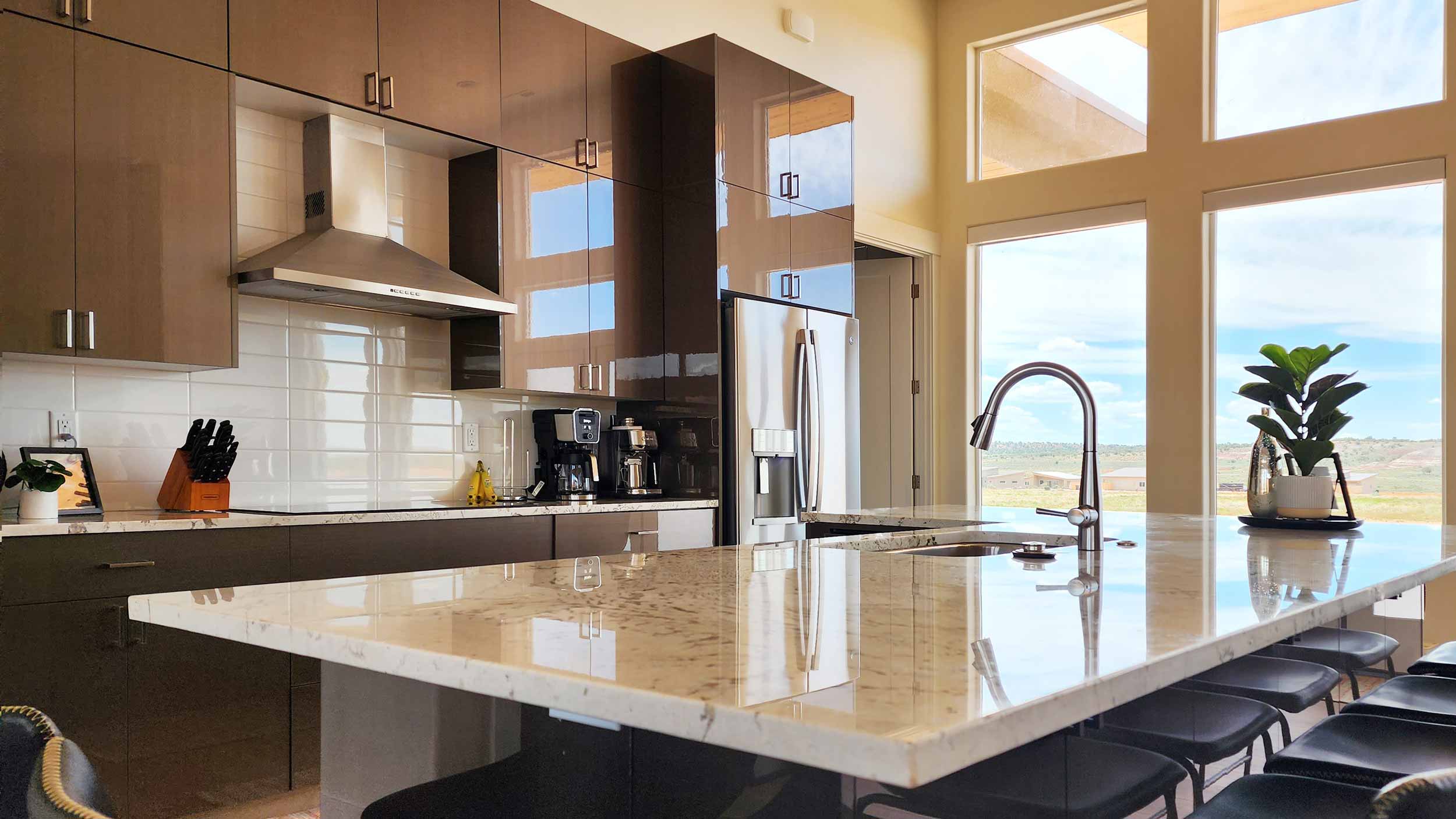
Because granite slabs are so strong, they are perfect for those large, dramatic kitchen islands. While quartz is popular for its uniform look, granite is the top recommendation for “chef’s kitchens” where the counters need to stand up to heavy use every single day.
| Kitchen Type | Best Suited Materials | Key Advantage |
| Family / High Use | Quartz | Low maintenance and high impact resistance. |
| Gourmet / Chef’s | Quartzite, Granite | Superior heat tolerance for hot cookware. |
| Large Seamless Islands | Quartz | Availability of jumbo slabs. |
Recommendation: For indoor kitchen surfaces, quartz, granite, and quartzite are all excellent choices depending on specific durability and maintenance needs.
Bathroom and Wet-Area Suitability
Bathroom Vanity Installations
In a steamy bathroom, you need a surface that won’t soak up moisture. Granite is a highly effective choice for vanities because it handles the humidity and the occasional spill of hairspray or perfume without staining or darkening.
Shower and Steam Room Environments
Granite is one of the best choices for a custom shower or steam room because it contains zero resins. High heat can actually soften the binders in engineered products, but natural stone is perfectly comfortable in high-heat, high-moisture environments.
Hygiene and Sanitation
When properly sealed, granite can perform very well in wet areas because sealing reduces liquid absorption and makes the surface easier to keep clean. However, sealing does not make granite truly non-porous, and the stone itself is not inherently antibacterial. Sanitary performance depends on the density of the specific granite, the condition of the surface, and routine cleaning, not sealing alone. See the Granite Countertop Maintenance Guide.
| Wet Area | Best Suited Material | Performance Note |
| Standard Vanity | Quartzite, Quartz | Quartz is practical. Quartzite is more aesthetic. |
| Steam Room | Quartzite, Granite | Resin-free stone handles sustained steam heat. |
| Shower Wall | Quartzite | Stunning natural veining with high durability. |
Recommendation: For bathrooms and wet areas, quartz and quartzite are top choices, though quartzite requires more specific care.
High-Heat Applications
Fireplace Surrounds
Granite is widely used for fireplace surrounds and hearths because it handles normal residential fireplace heat well. However, calling it “rated for zero-clearance fireplace hearths” is too broad, since zero-clearance requirements are set by the fireplace manufacturer and assembly design, not by the stone alone. Granite is a strong choice for these applications, but clearance and installation details should always follow the fireplace system specifications.
Sauna Installations
In a sauna, you want a material that stays structurally sound at 200°. Since granite was forged in volcanic heat, the temperatures of a home sauna are a walk in the park. It won’t bow, crack, or release any toxic binders into the air you’re breathing.
Outdoor Cooking Areas
Putting a hot pizza stone or a searing cast iron skillet directly on a counter is a “hard no” for most materials. While you should still use a trivet to be safe, granite’s thermal threshold is significantly higher than any man-made surface.
| Heat Source | Best Suited Materials | Risk Factor |
| Fireplace Hearth | Quartzite, Granite | Can safely contact high radiant heat. |
| Sauna Interior | Quartzite, Granite | No resins to off-gas or expand. |
| Outdoor Cooking Areas | Quartzite, Granite | Highest natural heat tolerance available. |
Recommendation: For high-heat areas, granite and quartzite offer superior thermal stability.
Commercial Applications
Restaurant Installations
Granite is used in many commercial settings because it is hard, heat-tolerant, and durable, but saying it is used on cook-lines because it can handle a 500° pan being slid across it overstates the case. Granite tolerates heat better than many countertop materials, yet sudden or repeated extreme thermal shock can still damage natural stone or affect seams and substrate conditions. In commercial kitchens, granite is better described as heat-tolerant rather than effectively immune to very hot cookware.
Retail Environments
For high-end retail, granite is about “point-loading.” It can handle the weight of heavy displays and the abrasive friction of thousands of customers sliding bags across the surface without losing its factory polish.
High-Traffic Installations
Whether it’s a hotel lobby or a bank teller line, granite is a “generational” material. It avoids the “wear lanes” and dull spots that eventually appear on softer stones like marble or travertine in high-traffic areas.
| Commercial Use | Best Suited Materials | Performance Note |
| Bar Tops | Quartz | Scratch and stain resistance, no resealing. |
| Commercial Kitchens | Granite, Quartzite | High heat and heavy impact resistance. |
| Restaurant Tables | Quartz | Scratch and stain resistance, no resealing. |
| Reception Areas | Granite, Quartzite | Maintains luster under foot/hand traffic. |
| Retail Countertops | Quartz, Granite, Quartzite | Risk of staining is lower in retail space. |
Recommendation: For commercial use, quartz is excellent for front-of-house, while granite is a lower-cost option for heavy-duty kitchen work. Quartz, granite, and quartzite all have a place in commercial settings.
Flooring Applications
Slip Resistance
Safety is the priority for flooring. While polished granite is slick, we typically recommend a “honed” or “leathered” finish for floors. These textures increase the “Coefficient of Friction,” making the stone safe for entryways where people might have wet shoes.
Wear Patterns
Granite flooring is famous for its “wear-life.” Because it is composed of quartz and feldspar, it is harder than the sand and grit tracked in from outside. This prevents the abrasive “hollows” that eventually form in high-traffic hallways.
Recommendation: For high-traffic flooring, quartzite offers the highest durability and natural slip resistance.
Vertical Applications
Backsplashes
A full-height granite backsplash is more than a design choice; it’s a maintenance win. By eliminating grout lines behind the stove, you’re removing the place where grease and oil usually collect and turn yellow.
Accent Walls
Granite is absolutely acceptable for accent walls. For a monolithic accent wall, the weight is the primary factor. Because a 3cm slab weighs about 20 lbs per square foot, we use mechanical z-clips rather than just glue.
Moisture and Stain Exposure
Vertical installations are naturally protected because gravity is on your side. Liquids don’t pool, so the risk of staining is almost zero. This makes granite the suitable “monolith” for high-moisture accent walls in luxury bathrooms or entry water features.
Recommendation: For vertical accents, quartz, granite, and quartzite can all provide stunning visual results with high performance.