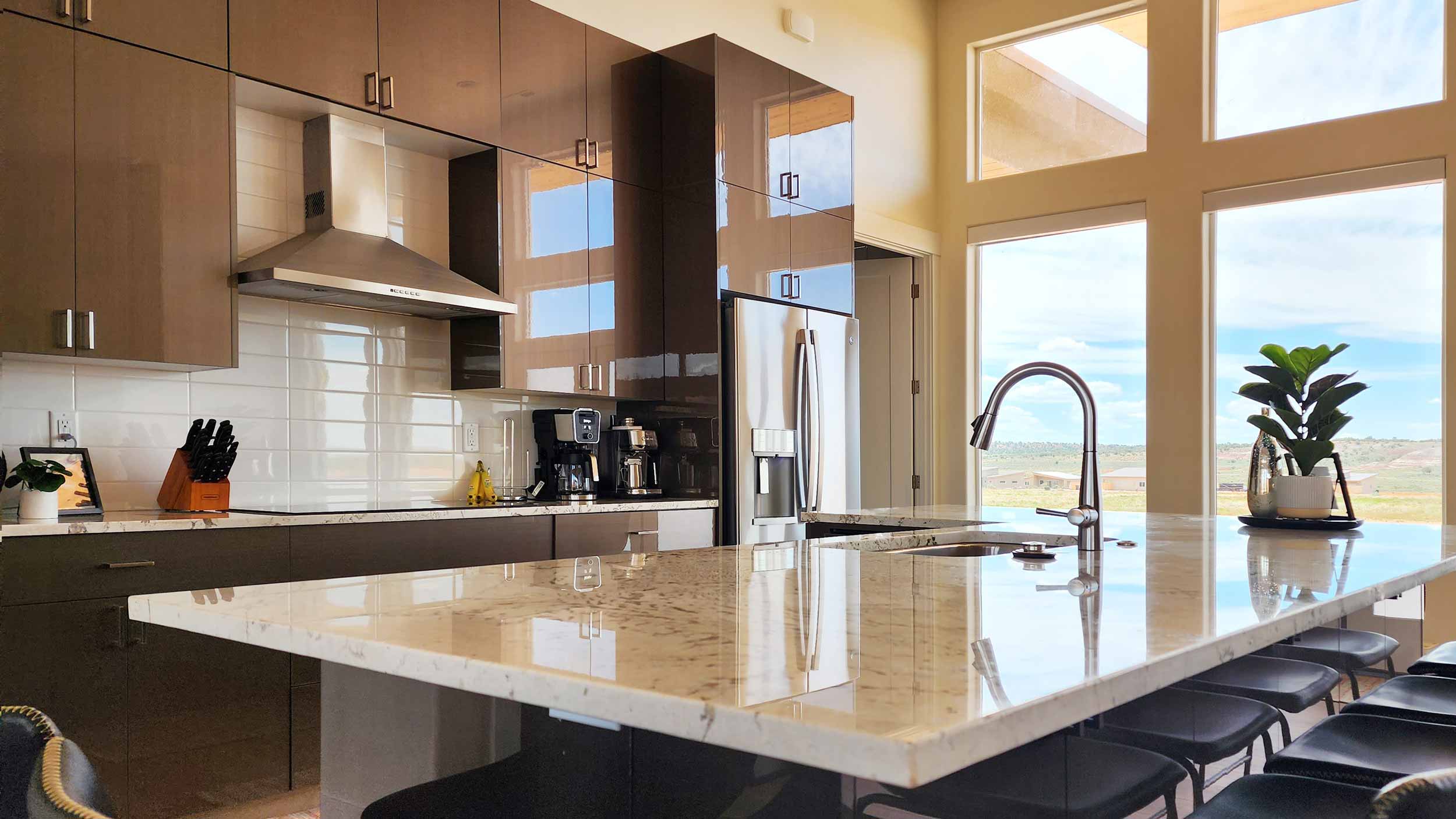

Quartz countertop maintenance and sealing requirements are often misunderstood by homeowners researching kitchen and bathroom materials. Many people assume that all stone surfaces require regular sealing and specialized care, but quartz behaves differently from many natural stones.
Understanding how quartz countertops should be cleaned, maintained, and protected helps homeowners make informed decisions before choosing a material. Maintenance expectations influence everything from daily cleaning habits to long-term upkeep costs. Quartz is widely known for its relatively simple care requirements, but proper cleaning practices still matter to keep the surface looking consistent and performing well over time.
This guide explains how quartz countertops should be cleaned during everyday use, which cleaning products are safe, which ones should be avoided, and why sealing is not required for quartz surfaces. If you are comparing materials, you may also want to review our Quartz Countertop Durability Guide or explore the catalog of Quartz countertops.
What Quartz Countertops Are
Quartz countertops are an engineered stone surface made from crushed natural quartz combined with resins and pigments. This manufacturing process produces a material that is non-porous and uniform, unlike many natural stones. Their engineered composition allows manufacturers to produce consistent patterns and colors while creating a dense, sealed surface that resists absorbing liquids.
This non-porous structure is the main reason quartz countertops have different maintenance and sealing requirements than materials like granite, marble, quartzite, or dolomite.
Everyday Cleaning
Quartz countertops are designed for routine household use and typically require simple daily cleaning practices.
In most homes, maintenance consists of wiping down the surface after normal kitchen activities such as cooking, food preparation, and dishwashing.
A typical daily cleaning routine may include:
- wiping the surface with a soft cloth or sponge
- cleaning spills promptly
- using mild household cleaners when necessary
For everyday use, warm water and a small amount of mild dish soap are usually sufficient. The surface can then be rinsed with clean water and dried with a microfiber cloth or soft towel to remove residue.
Because quartz surfaces are non-porous, most liquids remain on the surface rather than soaking into the material. This makes routine cleaning straightforward compared with many natural stone countertops.
Safe Cleaning Products
Most gentle household cleaning products are safe for quartz countertops when used correctly.
Safe cleaning products for quartz countertops:
- mild dish soap diluted with warm water
- non-abrasive household surface cleaners
- quartz-specific countertop cleaners
- pH-neutral stone cleaners
Microfiber cloths or soft sponges are typically the best tools for wiping the surface without leaving scratches or dull areas.
Some homeowners prefer specialty quartz cleaning sprays designed specifically for engineered stone. These products can help remove cooking residue and fingerprints while maintaining a streak-free appearance.
However, it is important to understand that specialized cleaners are not required for routine maintenance. In most situations, simple soap and water work just as effectively.
When choosing cleaning products, the main goal is to avoid substances that could damage the resin component of quartz.
Cleaning Products to Avoid
Although quartz countertops are durable surfaces, certain cleaning products can cause surface damage or discoloration if used repeatedly.
Cleaning products that should be avoided on quartz:
- abrasive scrubbing pads
- steel wool
- scouring powders
- highly acidic cleaners
- harsh alkaline chemicals
Abrasive tools such as rough scrub pads can dull the surface finish over time. Quartz countertops are typically polished during manufacturing, and aggressive scrubbing can reduce that polished appearance.
Chemicals that are especially problematic include:
- oven cleaners
- drain cleaners
- paint removers
- concentrated bleach solutions
- strong ammonia products
These chemicals may degrade the resin binders that hold the quartz particles together. Damage often appears as discoloration, hazy spots, or surface etching.
If stubborn residue needs to be removed, a plastic scraper or non-abrasive pad can usually lift dried food or sticky substances without harming the countertop.
Preventing Stains and Surface Damage
While quartz countertops resist absorbing liquids, homeowners can still adopt simple habits that help preserve the appearance of the surface.
Practical stain-prevention habits for quartz:
- wiping spills soon after they occur
- using cutting boards during food preparation
- avoiding harsh chemicals on the surface
Even though quartz is non-porous, leaving strong pigments such as red wine, coffee, or cooking oils on the surface for long periods may cause temporary staining if residues dry and harden.
Practical habits that reduce maintenance issues on quartz:
- placing hot cookware on trivets rather than directly on the countertop
- using cutting boards instead of slicing directly on the surface
- avoiding chemical spills from household cleaners
These practices help keep quartz surfaces clean and consistent in appearance over time.
Do Quartz Countertops Need Sealing?
Quartz countertops do not require sealing.
This is one of the most significant differences between quartz and many natural stone materials used in kitchens.
Natural stones such as granite, quartzite, and dolomite contain microscopic pores that can absorb liquids. These materials are commonly sealed to fill those pores and reduce staining.
Quartz countertops, however, are manufactured with resins that create a sealed, non-porous surface. Because liquids cannot penetrate the material, sealing is unnecessary. Applying a stone sealer to quartz countertops generally provides no benefit and may even create surface residue or streaking.
With natural stone materials, skipping sealing can allow liquids to penetrate the stone and create stains.
Quartz countertops behave differently.
Since quartz is manufactured with a non-porous structure, there is no sealing step. The countertop does not depend on an applied sealant for protection.
For quartz countertops, proper maintenance focuses on cleaning and avoiding damaging chemicals rather than applying protective sealants.
Practical Maintenance Tips
Although quartz countertops require relatively little maintenance, a few simple habits help preserve the surface over many years.
Practical homeowner guidelines include:
- clean surfaces regularly with mild soap and water
- avoid abrasive scrubbers
- remove sticky or greasy residue promptly
- wipe up spills from acidic liquids
Additional helpful practices include:
- protecting countertop edges from impacts
- avoiding harsh chemical exposure
- using trivets or hot pads when necessary
These habits support consistent appearance and reduce the likelihood of discoloration or surface damage.
Quartz countertops are often chosen specifically because they are low-maintenance surfaces. Maintenance tends to be straightforward when homeowners follow simple daily cleaning habits.
Key Takeaways
- Quartz countertops require simple daily cleaning with mild soap and water.
- Most non-abrasive household cleaners are safe for quartz surfaces.
- Abrasive scrubbers and harsh chemicals should be avoided.
- Quartz countertops are non-porous and do not require sealing.
- No sealing schedule or sealing tests are necessary.
- Proper cleaning habits help maintain appearance and prevent residue buildup.
- Compared with many natural stone surfaces, quartz offers relatively low long-term maintenance requirements.