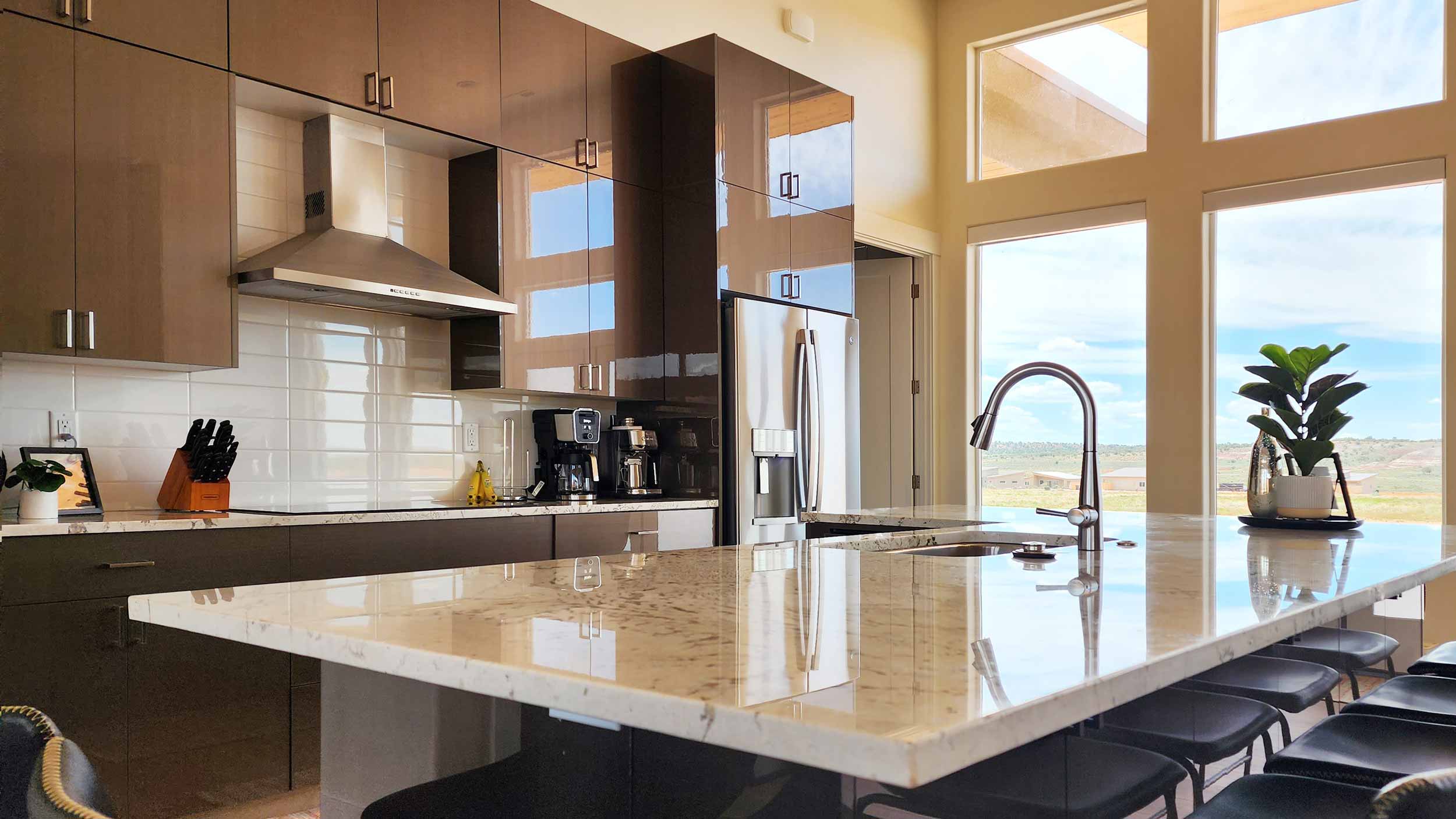

Marble countertops are widely recognized for their distinctive natural patterns and historic use in architecture, but durability is an important factor to understand before choosing marble for a kitchen or bathroom renovation. This Marble Countertop Durability Guide explains how marble performs under everyday conditions, including its resistance to heat, scratching, staining, and long-term wear.
Countertops experience constant use in most homes. Cooking heat, utensils, heavy cookware, and frequent spills all place stress on the surface. A durable countertop material can withstand these conditions while maintaining structural integrity and appearance over time.
Marble has been used as a building and decorative stone for thousands of years, appearing in sculptures, flooring, and architectural elements throughout the world. While marble is a strong natural stone, it behaves differently from harder countertop materials such as granite or quartzite. Understanding these differences helps homeowners set realistic expectations about how marble will perform in a residential environment.
This guide focuses specifically on the durability characteristics of marble countertops, helping homeowners evaluate whether marble aligns with their expectations for strength, wear resistance, and long-term performance.
For a detailed look at where this material performs best in a home, see our Suitability Guide to Marble Countertops: The Best (and Worst) Places to Install Marble.
Countertop Durability Comparison
| Material | Heat Resistance | Scratch Resistance | Stain Resistance | Ease of Maintenance |
|---|---|---|---|---|
| Quartz | 3/5 | 4/5 | 5/5 | 5/5 |
| Granite | 5/5 | 4/5 | 3/5 | 3/5 |
| Quartzite | 5/5 | 5/5 | 3/5 | 3/5 |
| Marble | 4/5 | 2/5 | 2/5 | 2/5 |
| Dolomite | 4/5 | 3/5 | 3/5 | 3/5 |
How Durable Are Marble Countertops?
While marble is valued for its visual characteristics, it is generally softer than many other natural stones used for countertops. This softness influences how the material responds to scratching, staining, and daily wear.
Marble countertops are durable natural stone surfaces, but they are less resistant to certain types of wear than harder countertop materials.
Several physical characteristics influence marble’s durability:
- a crystalline calcite structure
- moderate hardness compared to other stones
- natural porosity
These properties mean marble performs differently from materials such as granite or quartzite. Marble can tolerate significant use in residential environments, but it is generally more susceptible to scratching and staining than harder stones.
Marble also tends to develop surface patina over time. Small scratches and subtle wear marks can gradually appear on the surface as the countertop ages.
For some homeowners, this natural aging process is part of marble’s appeal. Others prefer materials that maintain a more uniform appearance over time.
Overall, marble offers long-term durability as a natural stone, but it typically requires more careful use than harder countertop materials.
Heat Resistance
Marble countertops provide good heat resistance, thanks to the mineral composition of the stone.
Because marble forms under significant geological heat and pressure, the stone itself can tolerate elevated temperatures without melting or softening. Brief contact with warm cookware generally does not damage the material.
However, marble is more sensitive to thermal stress and surface discoloration than some other natural stones. Sudden temperature changes may occasionally create stress within the stone.
In most residential kitchens, marble surfaces handle heat exposure from normal cooking activities without structural problems. However, extremely hot cookware placed directly on the surface could potentially cause localized damage in rare cases.
Compared to engineered materials that contain polymer resins, marble typically tolerates heat well. However, it may be slightly more sensitive to temperature stress than very dense natural stones such as granite or quartzite.
Scratch Resistance
Scratch resistance is one of the durability areas where marble differs most noticeably from harder countertop materials.
Marble ranks approximately 3 to 5 on the Mohs hardness scale, depending on the specific variety. This hardness level is lower than granite or quartzite, which means marble is more susceptible to surface scratching during everyday use.
Common kitchen activities that may produce scratches include:
- cutting directly on the surface
- sliding ceramic dishes across the countertop
- dragging metal cookware or utensils
These marks are usually surface-level scratches rather than structural damage, but they can become visible over time.
Marble countertops often develop a subtle patina as these small marks accumulate. In many homes, this gradual change in surface appearance reflects the natural aging of the stone rather than a failure of the material.
Compared to harder natural stones, marble is generally considered more prone to scratching during heavy kitchen use.
Stain Resistance
Marble is a naturally porous stone, which means it can absorb liquids under certain conditions.
The microscopic pores within marble allow certain substances to penetrate the surface if they remain on the countertop for extended periods. This characteristic can influence how marble responds to common kitchen spills.
Liquids that may interact with marble include:
- cooking oils
- wine
- coffee
- fruit juices
- tomato-based sauces
If these substances are left on the surface long enough, they may penetrate the stone and create discoloration.
Marble’s porosity varies depending on the specific quarry and mineral composition. Some marble varieties are relatively dense, while others are more absorbent.
Because of this variability, marble countertops may show greater sensitivity to staining than many other natural stone materials.
For information about daily care and surface protection, see our Marble Countertop Maintenance Guide.
Expected Lifespan
Marble countertops can provide long service life in residential environments, even though the material may show visible wear over time.
Because marble is a natural stone with stable mineral composition, it can remain structurally sound for decades. Many marble installations in homes last 30 years or longer.
However, the surface appearance of marble often changes as the stone ages. Scratches, subtle dulling, and natural patina may develop gradually through normal use.
This process does not usually affect the structural strength of the stone. Instead, it reflects the material’s natural interaction with daily household activity.
For homeowners who appreciate natural stone that develops character over time, marble’s aging process can be part of its appeal.
Practical Durability Considerations
Although marble is durable as a natural stone, certain everyday habits can help reduce surface wear.
Homeowners commonly use practices such as:
- cutting boards when preparing food
- avoiding heavy impacts along countertop edges
- placing heat pads or trivets under hot cookware
These practices help minimize scratching and reduce the likelihood of edge damage.
Because marble is somewhat softer than many other countertop materials, avoiding repeated abrasion and strong impacts can help maintain the surface appearance over time.
When Marble Is a Good Choice
Marble performs well in applications where extreme scratch resistance is not the primary requirement.
Situations where marble durability can be suitable include:
- kitchens used for moderate cooking activity
- baking stations where cooler surfaces are desirable
- bathroom vanities and decorative surfaces
- homeowners who appreciate natural stone that develops patina over time
Marble has long been used in architectural settings and can remain structurally stable for many decades. In environments where heavy mechanical wear is limited, marble countertops can perform reliably for many years.
To explore available styles and colors, see our selection of Marble countertops.
When Durability May Be a Concern
Marble may present durability challenges in kitchens that experience very heavy daily use.
Because marble is softer and more porous than materials such as granite or quartzite, it may be more susceptible to:
- surface scratches
- staining from certain liquids
- visible wear over time
Households that frequently cook with heavy cookware or perform intensive food preparation may find that marble develops surface marks more quickly than harder stones.
Understanding these characteristics helps homeowners evaluate whether marble aligns with their expectations for long-term performance.
For a broader overview of advantages and limitations, see Pros and Cons of Marble Countertops.
Key Takeaways
- The material offers good heat resistance, allowing it to tolerate typical kitchen temperatures.
- Marble is softer than many other natural stones, making it more susceptible to surface scratching.
- Because marble is porous, certain liquids may penetrate the surface and cause discoloration.
- Edge impacts can occasionally cause chipping, particularly along exposed corners.
- With typical residential use, marble countertops can remain structurally sound for several decades.
Marble remains a historically significant natural stone used in architecture and interior design. While it behaves differently from harder countertop materials, understanding its durability characteristics helps homeowners determine whether it suits their kitchen or bathroom environment.
Countertop Durability Comparison
For a broader comparison of how different materials perform, see our Countertop Durability Comparison. It explains how quartz, granite, quartzite, marble, and dolomite differ in heat tolerance, scratch resistance, stain resistance, and long-term wear.