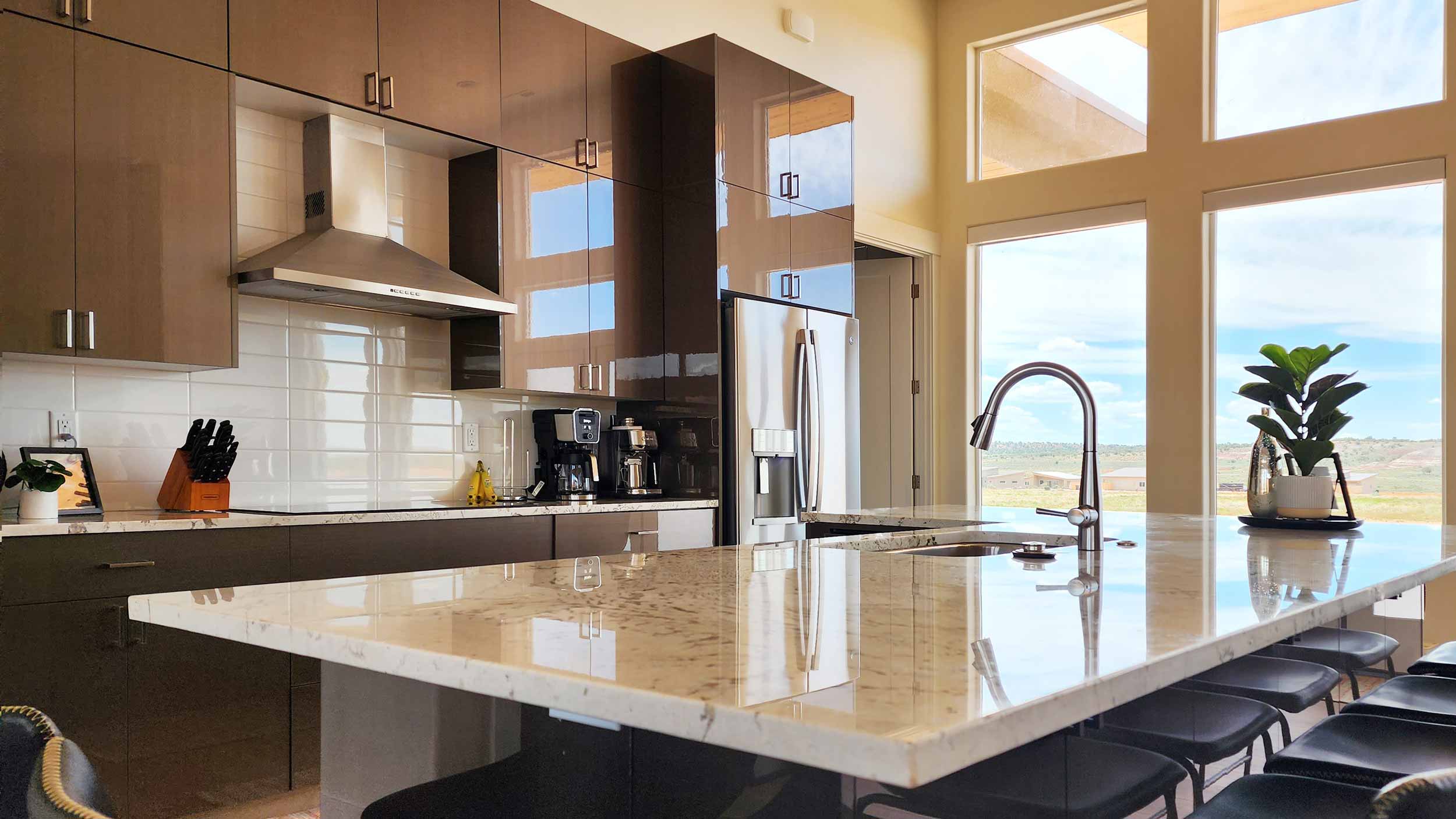

Understanding the pros and cons of dolomite countertops will help you decide whether the material aligns with your needs and expectations. Dolomite has become increasingly popular in recent years, especially among homeowners who like the appearance of marble but want a natural stone that can feel slightly more forgiving in everyday kitchens. At the same time, dolomite is still a natural stone with its own tradeoffs. It requires thoughtful maintenance and may not be ideal for every household.
| Category | Rating | What It Means |
|---|---|---|
| Durability | 3/5 | Moderately durable natural stone. |
| Ease of Maintenance | 3/5 | Requires sealing and careful cleaning habits. |
| Heat Resistance | 4/5 | Handles typical cooking heat well. |
| Scratch Resistance | 3/5 | Harder than marble, softer than granite. |
| Stain Resistance | 3/5 | Requires sealing and careful cleaning habits. |
Choosing Dolomite Countertops: What Matters Most
Why Choose Dolomite Countertops?
Dolomite countertops are often selected as a middle ground between marble and harder natural stones. The material offers the look of natural stone while providing somewhat stronger durability than marble.
The Primary Benefit of Dolomite:
Dolomite performs well in typical kitchen environments and handles everyday cooking heat without difficulty. Dolomite is harder than marble but softer than granite or quartzite. It offers moderate scratch resistance but may still show wear or scratches over time with heavy kitchen use.
The Primary Drawback of Dolomite:
Dolomite remains a carbonate stone, which means etching and surface wear can occur over time, especially if acidic ingredients remain on the surface.
What Are Dolomite Countertops?
Dolomite countertops are made from natural stone that is quarried and cut into slabs for countertop fabrication. The stone is sometimes chosen as an alternative to marble in kitchen designs.
Because dolomite is a natural material, slabs show variation created during the stone’s formation. Dolomite countertops are often selected when the goal is to achieve a marble-like look with somewhat stronger durability.
Advantages of Dolomite Countertops
Dolomite countertops offer several strengths that make them attractive to homeowners who want natural stone with refined visual character.
Marble-Like Appearance
One of the biggest reasons homeowners choose dolomite is its visual similarity to marble.
Many dolomite slabs feature:
- white or light gray backgrounds
- elegant veining patterns
- soft, refined color variation
This makes dolomite especially popular in kitchens designed with:
- bright cabinetry
- natural wood accents
- minimalist or transitional styles
Homeowners who want a more durable marble-inspired look in a natural stone often find dolomite appealing.
Natural Stone Character
Dolomite is quarried directly from the earth and cut into slabs before fabrication.
For those who prefer natural materials in their home, dolomite provides the authenticity of geological stone. Every slab contains its own mineral structure and pattern variation.
This uniqueness is one reason natural stone surfaces continue to appeal to homeowners who want the countertop to feel distinctive.
Comfortable Heat Tolerance for Everyday Cooking
Cooking habits often influence countertop material decisions.
Cooks who frequently move hot cookware from the stove to the counter might prefer natural stone surfaces because they tolerate heat comfortably during everyday kitchen activity.
Dolomite countertops generally perform well in typical cooking situations. Many homeowners still use trivets or hot pads as a precaution, but natural stone surfaces tend to feel forgiving when dealing with hot cookware.
For a deeper explanation of everyday performance, see the Dolomite Countertop Durability Guide.
Subtle and Refined Patterning
Compared with some dramatic natural stones, many dolomite slabs feature subtle, elegant veining.
This softer patterning works well in kitchens where the goal is:
- a calm, bright aesthetic
- understated luxury
- balanced design elements
Dolomite often integrates smoothly with both traditional and modern kitchens because its patterns tend to feel refined rather than bold.
Unique Slab Selection
Because dolomite is a natural stone, every slab has its own variation in mineral patterns and color.
For designers who enjoy selecting a specific slab and designing the kitchen around it, this process can be part of the appeal. The finished countertop often becomes a unique centerpiece of the kitchen.
Potential Drawbacks
While dolomite offers a beautiful natural stone appearance, homeowners should also understand the limitations that come with the material.
Maintenance Expectations
Dolomite is a natural stone and contains microscopic pores that can absorb liquids.
For this reason, dolomite countertops are typically sealed periodically to help maintain stain resistance. Homeowners who choose dolomite should expect some routine care over time.
For detailed care recommendations, see the Dolomite Countertop Maintenance Guide.
Sensitivity to Acidic Ingredients
Many natural stones that resemble marble can react with acidic ingredients used in everyday cooking.
Ingredients such as:
- lemon juice
- vinegar
- wine
- tomato sauce
can sometimes leave visible marks on the surface.
For households that cook frequently with acidic ingredients, this is an important factor to consider.
Slab Variation Requires Careful Selection
Because dolomite is quarried stone, slab patterns can vary.
This means:
- the slab seen in a showroom may not match another slab from the same quarry
- multiple slabs may differ slightly
- homeowners often visit the stone yard to choose their exact slab
Some homeowners enjoy this process, while others prefer the predictability of engineered materials.
Matching Stone Later Can Be Difficult
Since every dolomite slab is unique, matching existing countertops later can be challenging.
If a kitchen renovation expands years later or part of the countertop needs replacement, the original slab may no longer be available.
While this situation is uncommon, it is worth considering for homeowners planning long-term renovations.
Natural Stone Requires Thoughtful Care
Dolomite countertops are not maintenance-free.
In addition to regularly sealing dolomite countertops, you’ll need to develop simple habits to protect natural stone surfaces, such as:
- wiping spills promptly
- using cutting boards
- avoiding harsh chemicals
These habits are manageable for most households but still represent an additional responsibility compared with some engineered surfaces like quartz.
Ideal Use Cases
Dolomite countertops tend to work particularly well in kitchens where visual elegance and natural stone character are priorities.
Dolomite is often a strong fit for:
- homeowners who want a marble-inspired look
- bright kitchens with light cabinetry
- transitional or classic interior styles
- kitchens where natural stone is a design feature
Dolomite is also used in bathrooms and other interior spaces where elegant stone surfaces complement the design.
For a detailed look at where this material performs best in a home, see: The Best (and Worst) Places to Install Dolomite.
Situations Where Another Material May Be Better
Although dolomite works well in many kitchens, some homeowners prefer other materials depending on their priorities.
Quartz or granite may be preferable when homeowners want:
- extremely low maintenance surfaces (see: quartz)
- perfectly consistent patterns across large installations (see: quartz, or granite)
- countertops that are highly resistant to everyday kitchen chemicals (see: quartz)
In practice, countertop choices often reflect lifestyle priorities.
Homeowners who choose dolomite usually value:
- natural stone authenticity
- marble-like aesthetics but with better durability
- unique slab character
Homeowners who prioritize simpler maintenance or more predictable design patterns should consider natural stones like granite or engineered surfaces like quartz.
Countertop Durability Comparison
For a full side-by-side breakdown of countertop materials, visit our Countertop Durability Comparison, where quartz, granite, quartzite, marble, and dolomite are evaluated using the same durability criteria.