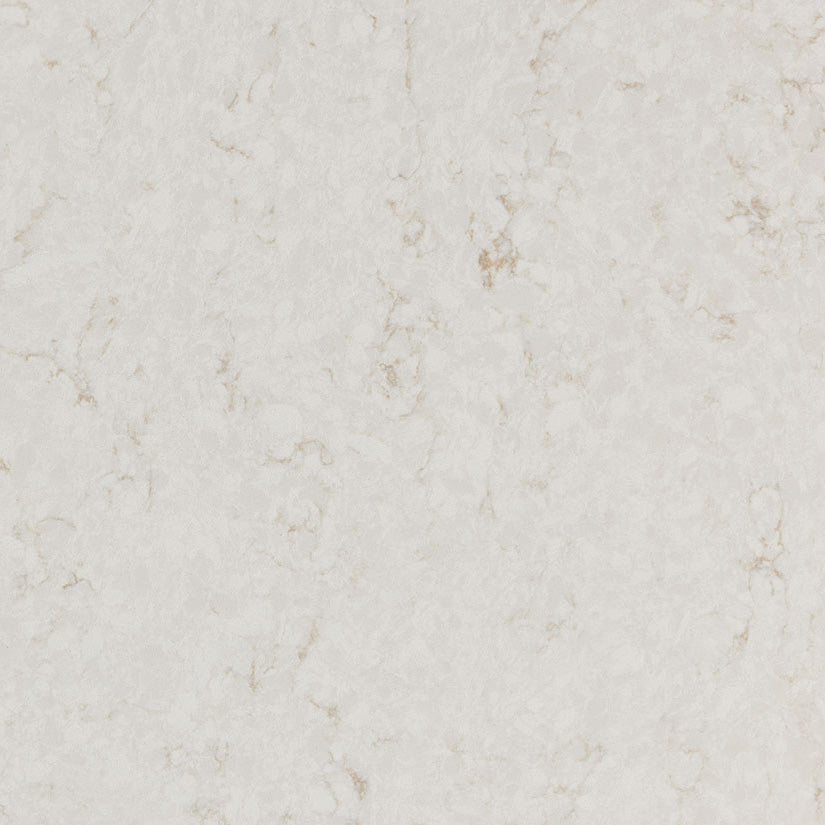
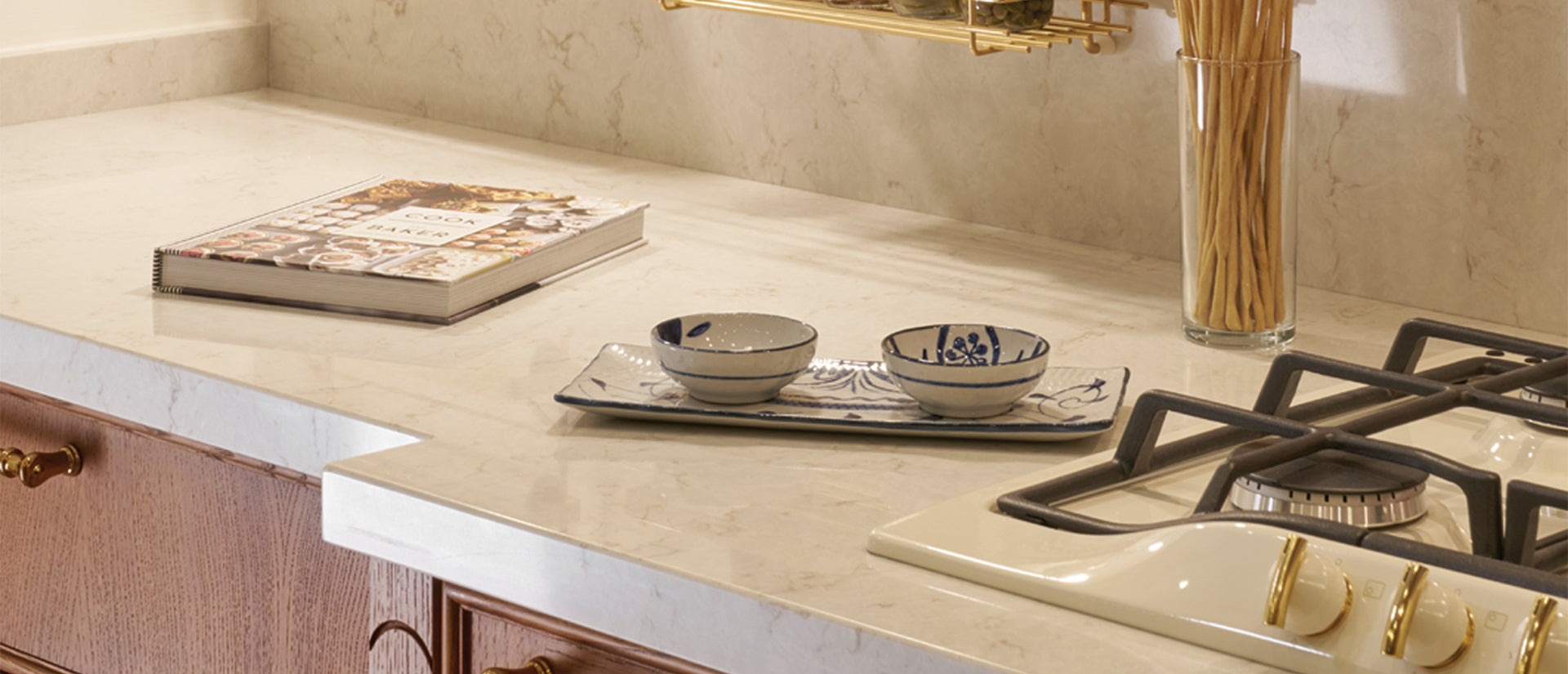
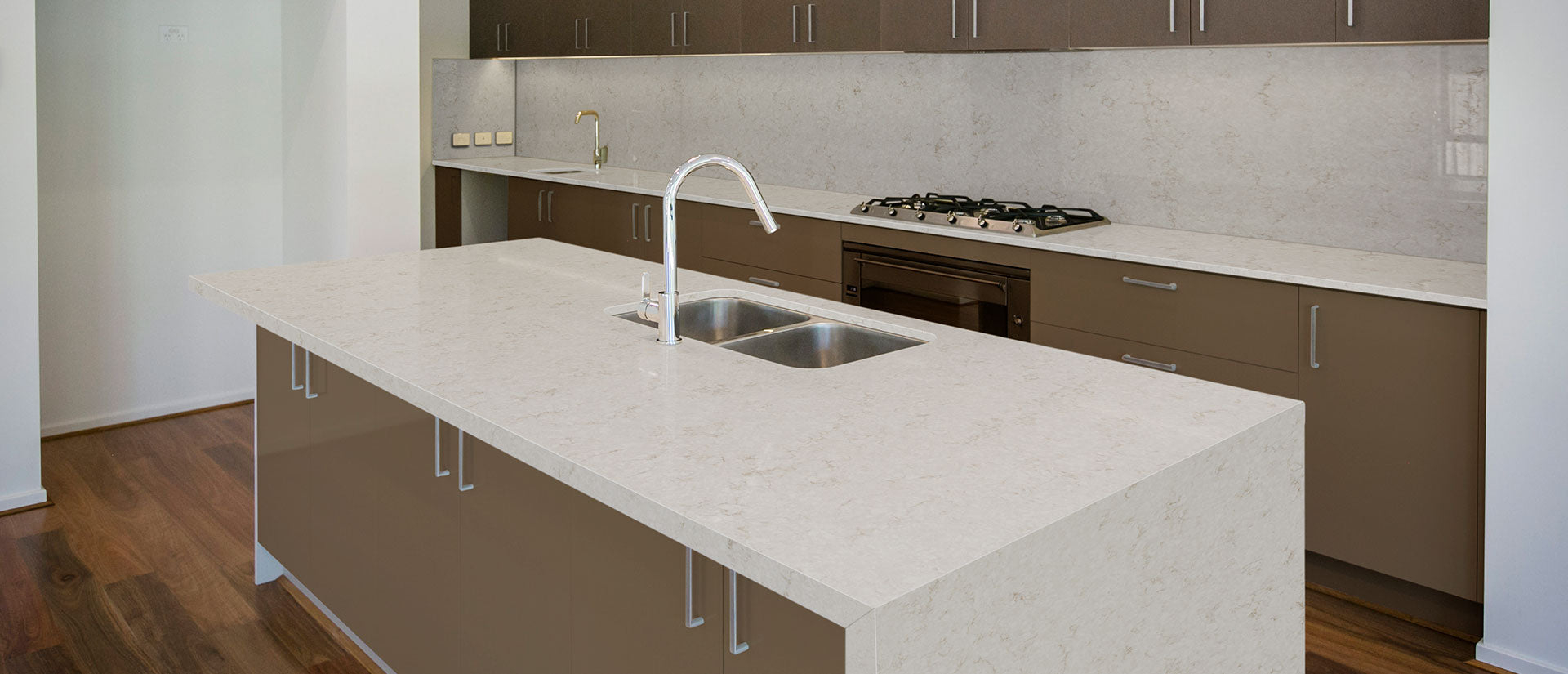
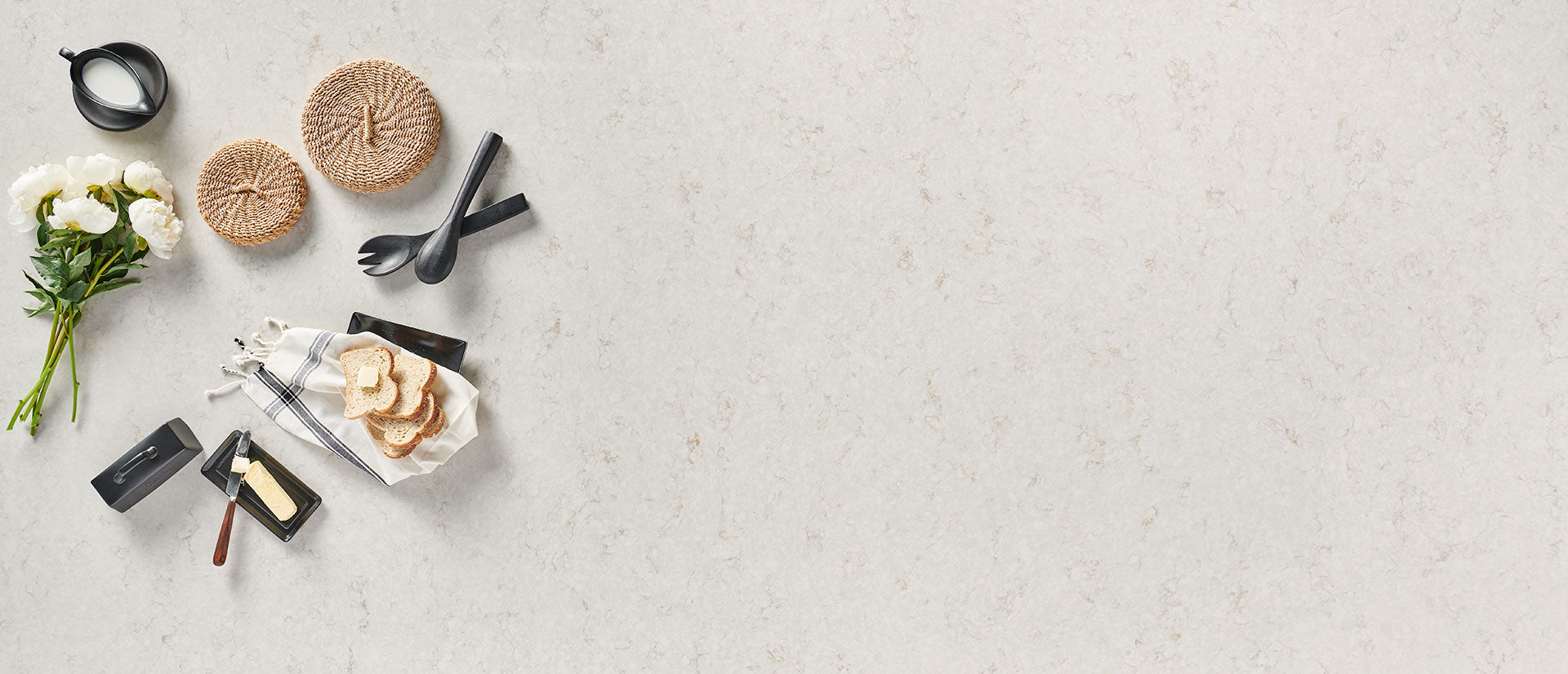
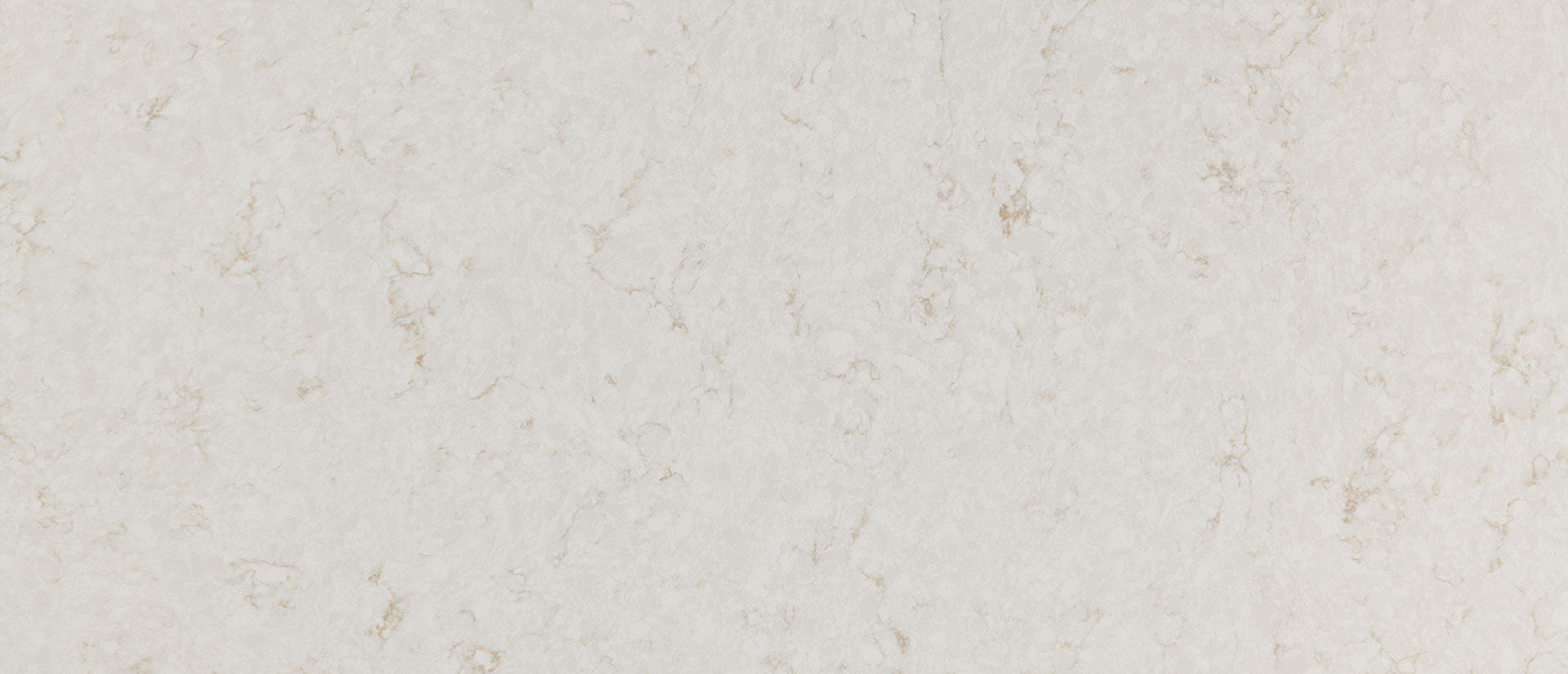
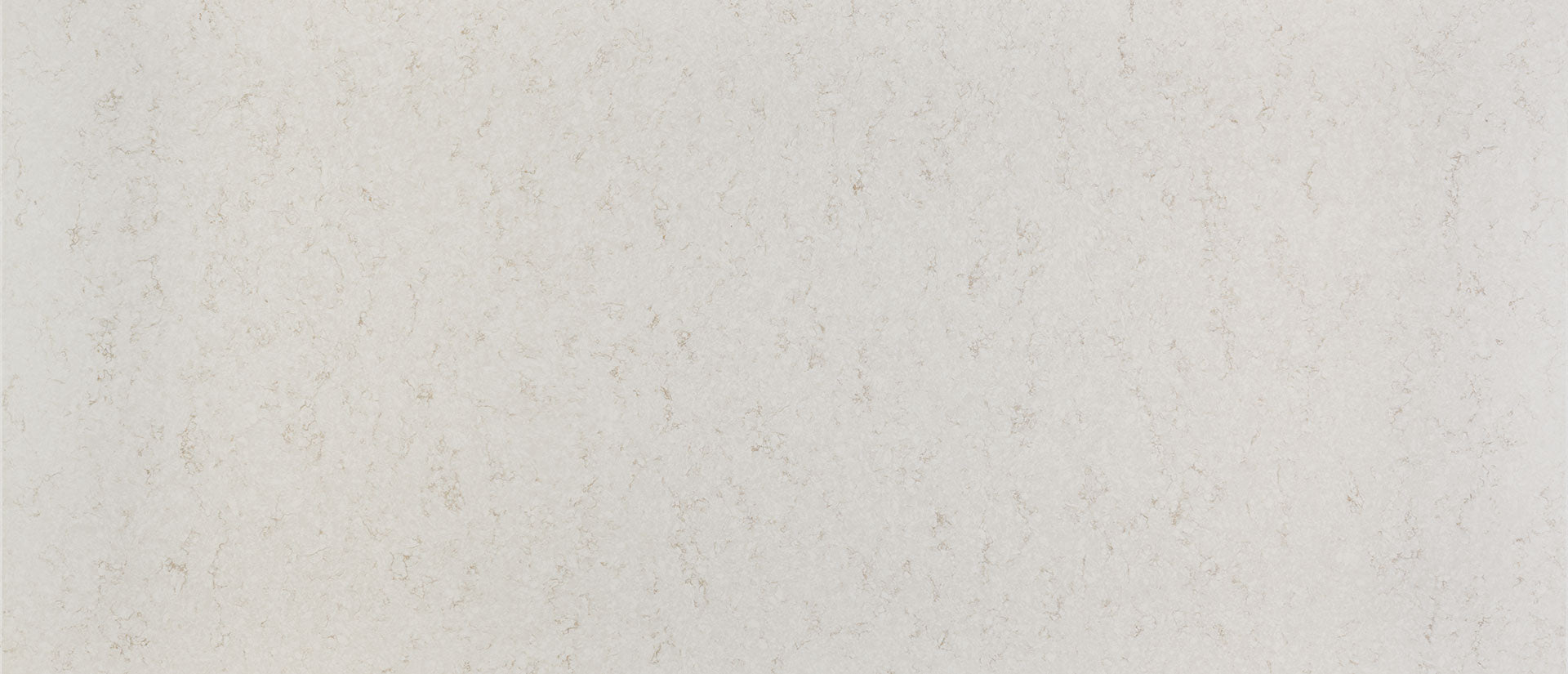
Cashmere Taj features a soft, creamy background and bronze and gold Carrara veining, evoking the look of natural stone. Chic and sophisticated, this gorgeous, on-trend quartz is strong, durable, and easy to maintain, making it the perfect addition to residential and commercial spaces. Use this attractive surface solution to create beautiful countertops, waterfall islands, and accent walls. Additionally, the surface features a high-gloss polished finish, enhancing the quartz’s luxuriously soft coloration and shine.
Cashmere Taj Quartz Specifications
Product: Quartz
Grade: 4
Primary Color: Beige
Accent Color(s): Brown, Gold
Thickness: 3 cm and 2 cm available
Finish: Polished
Average Size: 130″ x 65″
Square Feet: 76.28
Price Per ft² (3 cm): $33.66
Price Per ft² (2 cm): $28.70
Available in the U.S. for fast shipping.
Quartz Overview
Performance Category
Rating
Heat Resistance
3/5
Scratch Resistance
4/5
Stain Resistance
5/5
Ease of Maintenance
5/5
Requires Re-Sealing
No
These ratings reflect typical performance expectations. For a side-by-side breakdown of countertop materials, see our Countertop Durability Comparison.
Learn More About Quartz
Learn more about how quartz performs in real-world installations:
Quartz is often chosen when low maintenance and consistent performance are the highest priorities. Because the material is engineered, quartz surfaces are non-porous and resist staining without requiring sealing. Quartz is commonly used in kitchens where durability, predictable surface behavior, and minimal upkeep are important.
Quartz performs best in controlled indoor environments such as residential kitchens and bathroom vanities. Because the material is engineered and non-porous, it offers consistent performance in spaces where surfaces are used daily but remain protected from direct weather exposure. Quartz is commonly installed in homes where durability, stain resistance, and predictable surface behavior are priorities.
Where Quartz May Not Be Ideal
Quartz may be less suitable in environments exposed to prolonged sunlight or outdoor weather conditions. The resins used in engineered quartz can be affected by ultraviolet exposure over time, which is why quartz is generally not recommended for outdoor kitchens. It is also rarely used for flooring applications where heavy impact or abrasive wear can occur.

 Available in the U.S. for fast shipping.